Field trials of Beetless on citrus plantations in Brazil
- bvelykyi
- Oct 19, 2024
- 2 min read

In September 2024, the Beetless team launched large-scale field trials of its first-generation system on young citrus plantations in the Porto Ferreira region of São Paulo State — one of Brazil’s key agricultural hubs. The testing is being carried out in partnership with one of the country’s largest orange producers, providing an opportunity to assess the technology’s effectiveness in a complex, large-scale commercial environment.
The impetus for the trials was the critical situation unfolding on citrus farms in Brazil, as well as in Florida and California, due to the rapid spread of the Asian citrus psyllid (Diaphorina citri) — an insect vector of the Candidatus Liberibacter asiaticus bacterium, which causes Huanglongbing (HLB), also known as citrus greening disease. This disease has already led to widespread devastation of citrus groves in several regions.
The increasing resistance of the pest to conventional pesticides is forcing farmers to intensify chemical treatments, leading to the oversaturation of ecosystems with agrochemicals and heightening environmental risks. In this context, the Beetless solution — an autonomous system for precision pest monitoring — has the opportunity to prove its effectiveness and environmental safety in real-world conditions characterized by high agronomic pressure.
The goal of the trials was to test the performance of intelligent traps and the automated pest identification system, particularly for the early detection of high-risk flying species. The results demonstrated the system’s high sensitivity and reliability, and farmers and agronomists have already provided positive feedback — highlighting the potential of the Beetless solution as an environmentally friendly alternative to traditional chemical pest control methods.

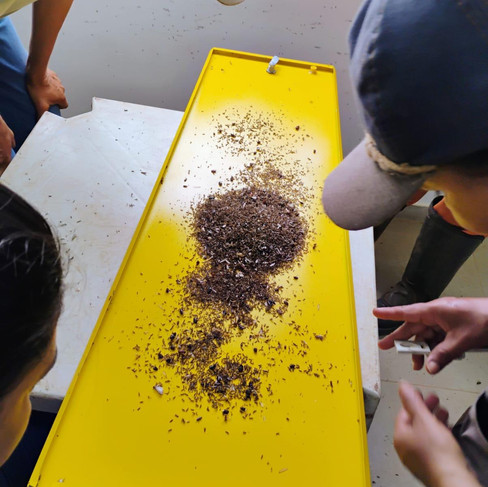


Brazil is the world’s leading producer and exporter of oranges and orange juice, accounting for over 30% of global orange production and more than 50% of juice exports. Conducting trials in such a critically important agricultural environment provides valuable insights for adapting the technology to the needs of industrial-scale citrus production.
This collaboration marks an important milestone in our mission to develop sustainable, high-tech solutions for agriculture — grounded in the principles of precision, safety, and environmental balance.


Comments